Camping: Cheaper Than a Hotel, More Complicated Than You Think
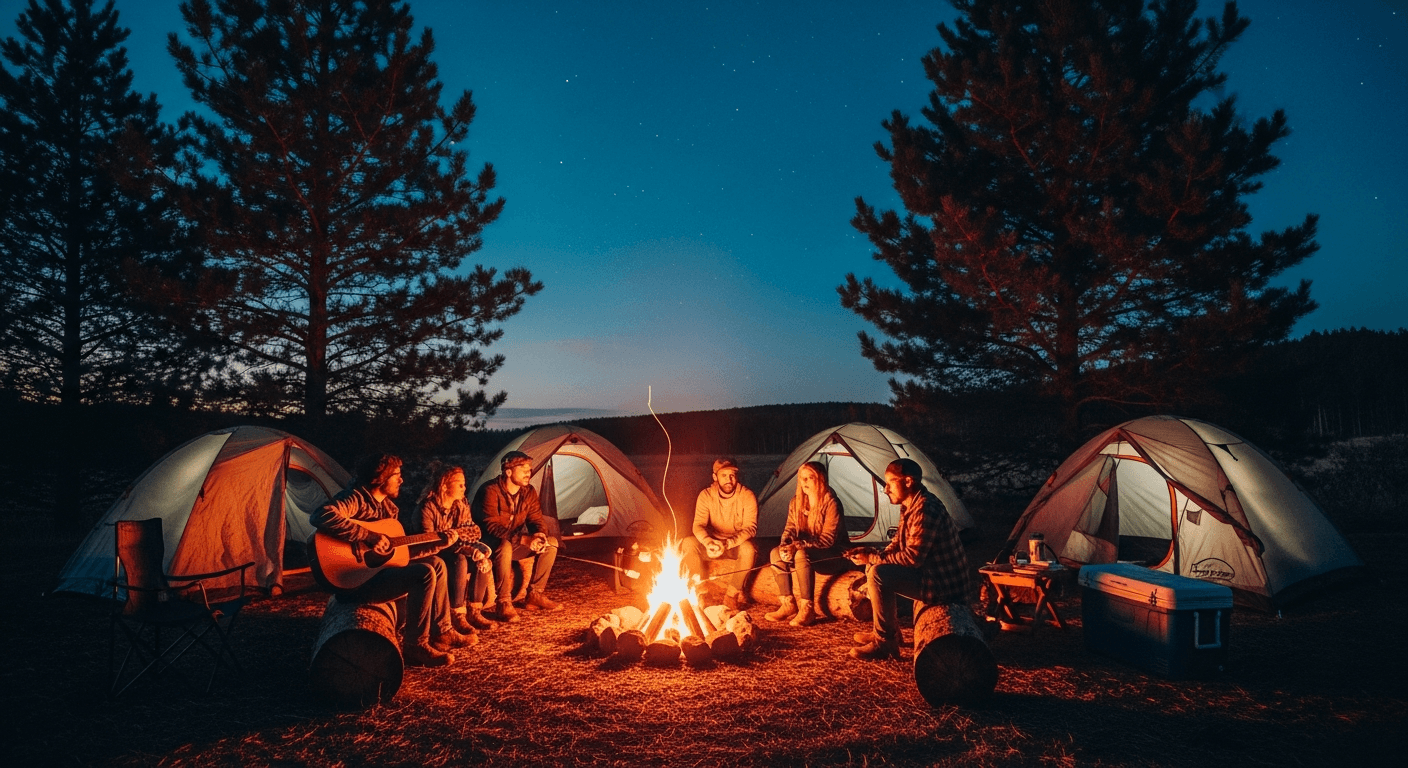
The appeal of group camping is obvious. Fresh air, campfires, no cell service, and quality time with friends in nature. The cost seems negligible compared to a hotel-based trip. But anyone who's actually organized a group camping trip knows that "cheap" is relative and "simple" is an illusion.
Campsite reservations—especially at popular spots—can run $35-$75 per night per site. If your group needs multiple sites, that adds up quickly. Then there's gear: tents, sleeping bags, cooking equipment, coolers, lanterns. Not everyone has their own, and communal gear has to come from somewhere.
Add in food for the whole group, firewood (which is surprisingly expensive at $8-$15 a bundle), ice for the coolers, bug spray, camp chairs, and gas for getting there, and your "cheap camping trip" is suddenly a $1,500 shared expense for eight people.
Shared Gear vs. Personal Gear
The first step in budgeting a group camping trip is separating shared expenses from personal ones. Shared costs include the campsite reservation, communal food and drinks, firewood, shared cooking equipment, and any group activities like kayak rentals or guided hikes.
Personal expenses are things like your own tent, sleeping bag, personal snacks, and any individual gear you need. These are your responsibility and don't need to be split with the group.
The gray area is where trouble starts. Someone brings their $300 canopy tent for the group to use. Someone else brings a camp stove they bought specifically for this trip. Are those shared costs? Personal contributions? Gifts to the group? Define this before the trip, not during an argument at the campsite.
The Food Situation
Camp food is one of the great joys of outdoor trips. Burgers over the fire. Morning coffee from a percolator. S'mores under the stars. But someone has to buy all that food, prep it, and bring it—and that someone usually ends up spending way more than their share.
The fairest approach is a communal food pool. Before the trip, plan the meals together. Make a grocery list. Estimate the total cost. Then everyone contributes equally to a Pooled pool that covers all shared food and drinks. One or two people handle the shopping, and the receipts are everyone's business, not just the buyer's.
This prevents the situation where one person brings steaks for everyone and another person brings a bag of marshmallows and calls it even. When the food budget is pooled, the contribution is equal, and the meal planning is collaborative.
Creating Your Camping Trip Pool
Set up a pool on Pooled that covers all shared expenses. Break it down clearly: "Weekend Camping Trip - Joshua Tree. Campsite (2 sites x 2 nights): $140. Firewood: $50. Communal food and drinks: $300. Gear rental (canopy, extra chairs): $80. Ice and supplies: $30. Total: $600. Per person (8 people): $75."
Share the pool link when you first start planning—not a week before the trip when people have already mentally budgeted their weekend. Early collection means early commitment, and early commitment means fewer dropouts.
If some people are bringing valuable shared gear (a camp stove, a large tent, a water filter), acknowledge that in the pool description. Maybe they contribute $50 instead of $75 because their gear contribution has real value. Being explicit about this prevents resentment in both directions.
When Plans Change in the Wilderness
Camping trips are uniquely susceptible to plan changes. Weather shifts. A campsite is unexpectedly closed. The group decides spontaneously to extend an extra night. Someone realizes they forgot to bring a critical piece of equipment and someone has to make a supply run.
Having a funded pool gives the group flexibility to handle surprises. If the campsite is closed and you need to book an alternative, the money is there. If the group votes to rent kayaks on Saturday, the fund can cover it. Decisions happen faster when the budget is already collected.
Build a small buffer into your pool—an extra $50-$100—for exactly these situations. At the end of the trip, any unused funds can be returned proportionally. It's much easier to refund a small overage than to collect additional money mid-trip when everyone's in the woods with spotty cell service.

Leave No Trace (Financially)
The camping community lives by the "leave no trace" principle—leave the campsite exactly as you found it. The same principle should apply to group finances. When the trip is over, there should be no outstanding debts, no IOUs, and no lingering resentment about who paid what.
Pooled makes this possible by front-loading the financial responsibility. Everyone pays before the trip. The money is spent during the trip. And when you pack up and drive home, the only things you're bringing back are memories, photos, and maybe a slight campfire smell on your clothes.
Plan your trip. Fund it together. Enjoy the outdoors. And leave the campsite—and the group finances—cleaner than you found them.